
How to reconstitute peptides
Peptides ship as a freeze-dried powder and must be dissolved before use. The method is straightforward, but two mistakes — shaking, and adding water directly onto the powder — will degrade the compound before it ever reaches the animal.
The short answer
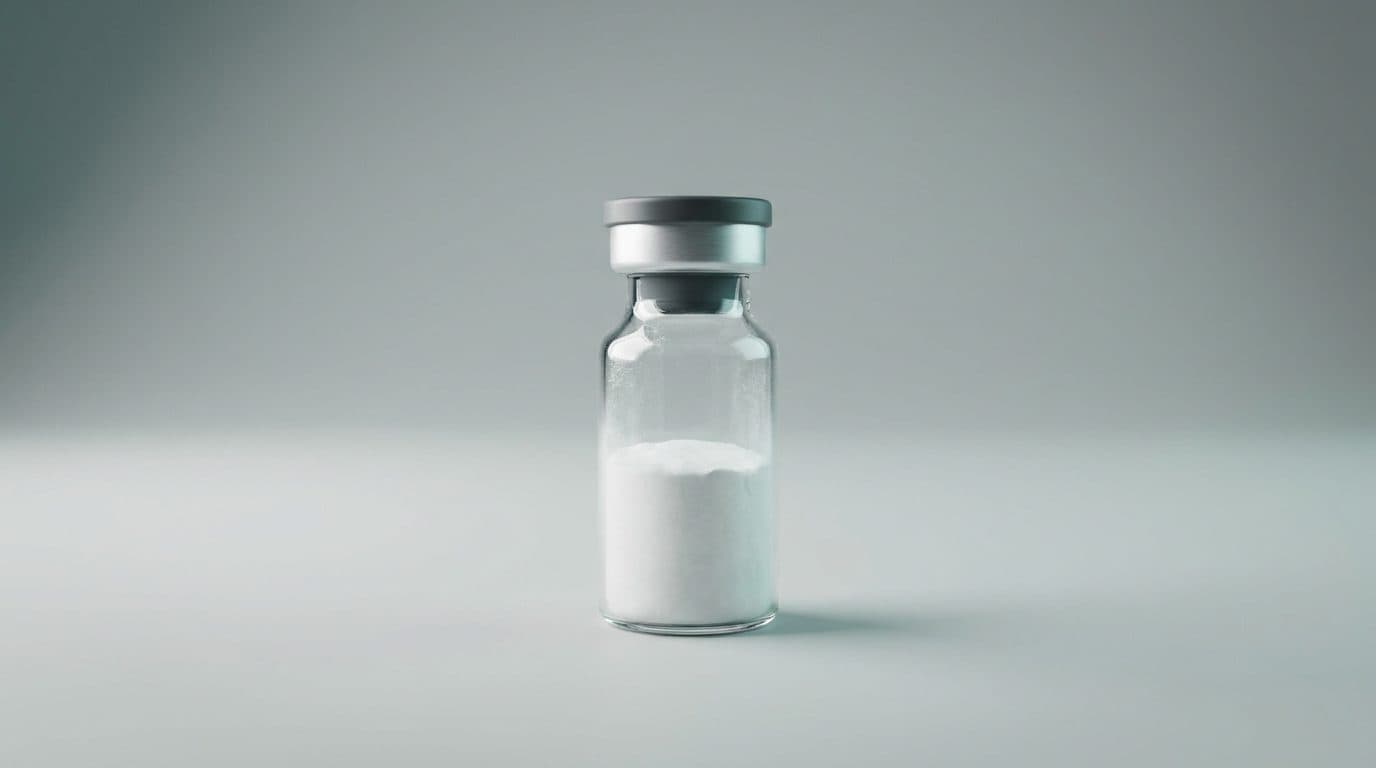
To reconstitute a lyophilised peptide, bring the vial and bacteriostatic water to room temperature, disinfect both stoppers, then add the water slowly down the inside wall of the vial rather than onto the powder. Swirl gently until dissolved — never shake, which denatures the peptide. Label with the concentration and date, and refrigerate at 2–8°C, where it typically remains usable for two to four weeks.
Step by step
- 1Work out the concentration you want
Divide the vial content by the volume of water you will add. A 5 mg vial reconstituted with 2 mL of bacteriostatic water gives 2.5 mg/mL, meaning 0.1 mL on an insulin syringe delivers 250 mcg. Choosing a concentration that puts your dose at a readable mark on the syringe matters more than any particular number — a dose that lands between gradations invites measurement error every single time.
- 2Let both vials reach room temperature
Take the peptide vial and the bacteriostatic water out of the refrigerator and allow them to come to room temperature. Adding cold water to cold lyophilised powder slows dissolution and encourages the vigorous shaking that damages peptides.
- 3Disinfect both stoppers
Wipe the rubber stopper of each vial with a fresh alcohol swab and let it dry. Do not skip the drying — introducing wet alcohol into the vial is a contamination route, not a sterilisation step.
- 4Draw the bacteriostatic water
Using a sterile syringe, draw the calculated volume of bacteriostatic water. Bacteriostatic water contains 0.9% benzyl alcohol as a preservative, which is what makes multi-dose use over several weeks possible. Sterile water without preservative is single-use only.
- 5Add the water down the vial wall
Angle the needle so the water runs down the inside wall of the peptide vial rather than jetting directly onto the powder. Direct impact shears peptide chains. Let the stream be slow and controlled.
- 6Dissolve by swirling, never shaking
Roll or swirl the vial gently between your fingers until the powder dissolves, which usually takes under a minute. Never shake. Shaking denatures peptides and the foaming it produces is a visible sign of exactly that. If material remains undissolved after a few minutes of gentle swirling, let the vial rest at room temperature rather than agitating it harder.
- 7Inspect the solution
A correctly reconstituted peptide solution is clear and colourless with no visible particulate. Cloudiness, floating material, or discoloration means the vial should not be used.
- 8Label and refrigerate
Write the compound, the concentration, and the reconstitution date on the vial. Store at 2–8°C. Reconstituted peptides are generally considered stable for around two to four weeks refrigerated, depending on the compound — the label is what prevents a vial of uncertain age being used months later.
The mistakes that ruin a vial
⚠ Shaking the vial
This is the most common and most consequential error. Mechanical agitation denatures peptide chains, and the foaming you see is the damage happening. A shaken vial may look identical to a correctly handled one while delivering a fraction of the intended activity.
Jetting water directly onto the powder
Force the water in and the impact shears the peptide. Angle the needle so the stream runs down the vial wall and pools gently around the cake.
Using unpreserved sterile water for a multi-dose vial
Sterile water for injection contains no preservative. Once punctured for a second dose it is a contamination risk. Bacteriostatic water contains benzyl alcohol precisely to allow repeated withdrawals.
Leaving the vial unlabelled
Without a concentration and date on the vial, you lose the ability to dose accurately and the ability to know whether the contents are still good. Both failures are silent.
Related guides
Common questions
What water do I use to reconstitute peptides?+
Bacteriostatic water, which contains 0.9% benzyl alcohol as a preservative and permits repeated withdrawals from the same vial over several weeks. Sterile water for injection has no preservative and is single-use only. Tap, distilled, and drinking water are not appropriate for anything injected.
Can I shake the vial to dissolve the powder faster?+
No. Shaking mechanically denatures peptides and the foam it produces is the visible evidence. Swirl or roll the vial gently instead. If dissolution is slow, allow the vial to stand at room temperature rather than agitating it harder.
How long does a reconstituted peptide last?+
Generally two to four weeks refrigerated at 2–8°C, varying by compound. Lyophilised powder that has not been reconstituted is stable far longer. Always label the vial with the reconstitution date — this is the single most useful habit in handling these compounds.
How do I know how much to draw up?+
Divide your target dose by the concentration you created. At 2.5 mg/mL, a 250 mcg dose is 0.1 mL. Insulin syringes are marked in units where 100 units equals 1 mL, so 0.1 mL is the 10-unit mark. Use the dose calculator to establish the dose first, then convert to volume.
Educational information — not veterinary medical advice
Everything on this page is compiled from published peer-reviewed literature for educational and research purposes. It does not establish a veterinarian-client-patient relationship (VCPR) and is not a substitute for veterinary examination and diagnosis. Most compounds described here are investigational or used off-label and are not FDA-approved for these purposes in dogs. Extralabel drug use in animals requires a valid VCPR and the direct supervision of a licensed veterinarian under AMDUCA (21 U.S.C. §360b). Dosing figures are reported as they appear in the source literature and are not recommendations.